Annoucement: Info Evening
This year our info evening will be held at 10.81 Emil-Mosonyi-Seminarraum (HS 26) starting from 17:45. Afterwards you may join us at our work space at Campus Ost.
We will start the evening with a small presentation, explaining what Kamaro is and what we do. Afterwards we will showcase our robot and answer any questions you might have. Snacks will be provided.
Campusplan
Reinforcement Learning and Model Predictive Control
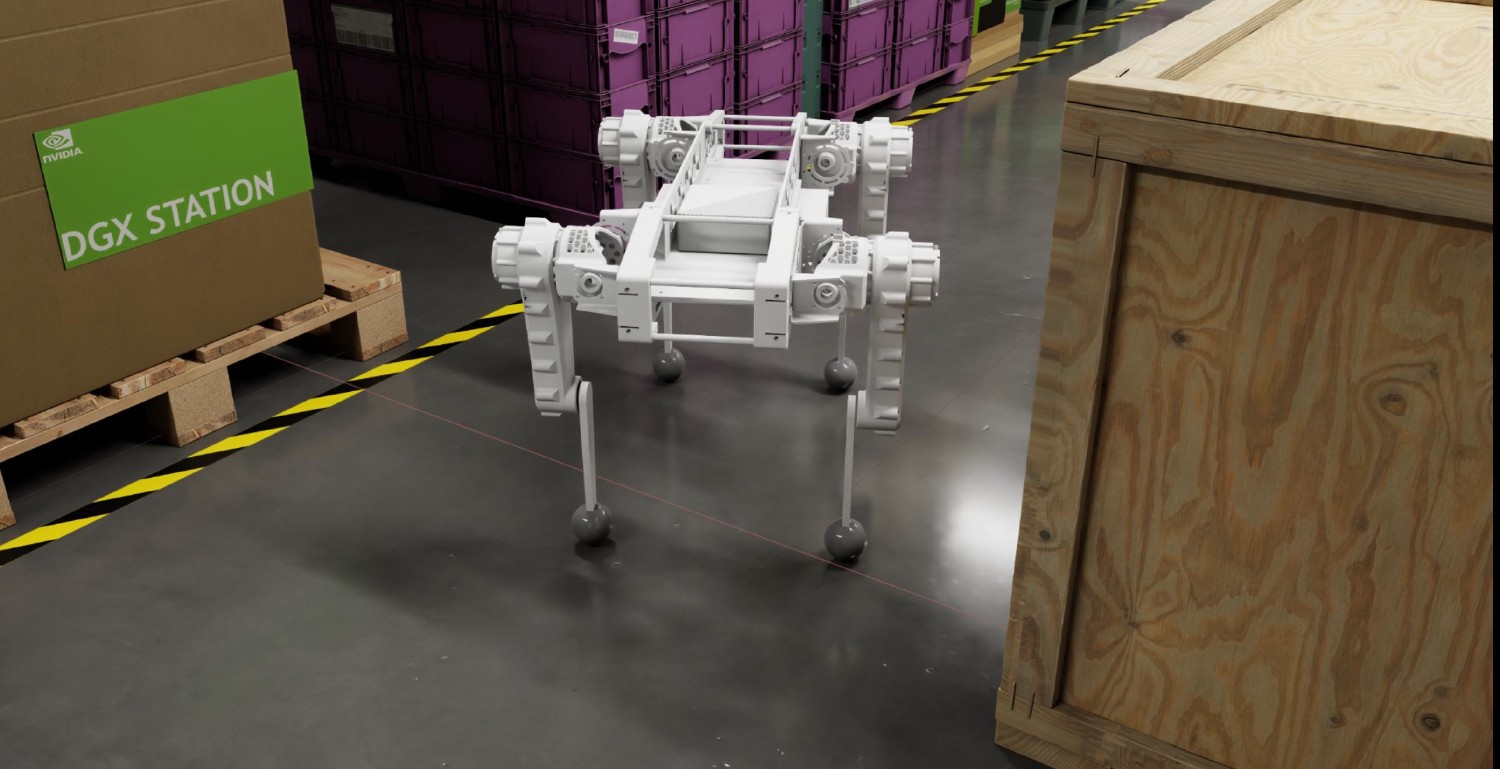
Although Luna relies on a broad range of sensors delivering real time feedback for direct control, we are planning to enhance the capabilities and real world Application. There are two distinct ways to improve those Aspect through Machine Learning (ML), on one side we use auxiliary ML models to increase the reliability of our system as a whole through using additional sensors to improve main sensors readings. The other application covers a broader range of application through learning Agent Policies that can control luna on their own and follow given commands such as moving in a certain direction or rotating on the spot. Through the implementation of digital twin we were able to test our software stack and hardware plans before starting the costly process of creating hardware prototypes, therefore increasing the amount of time we needed to get our first working system into a prototype state.
Anas Kahal + Kamaro Engineering e. V. win first place at Kunstpreis TechnologieRegion Karlsruhe
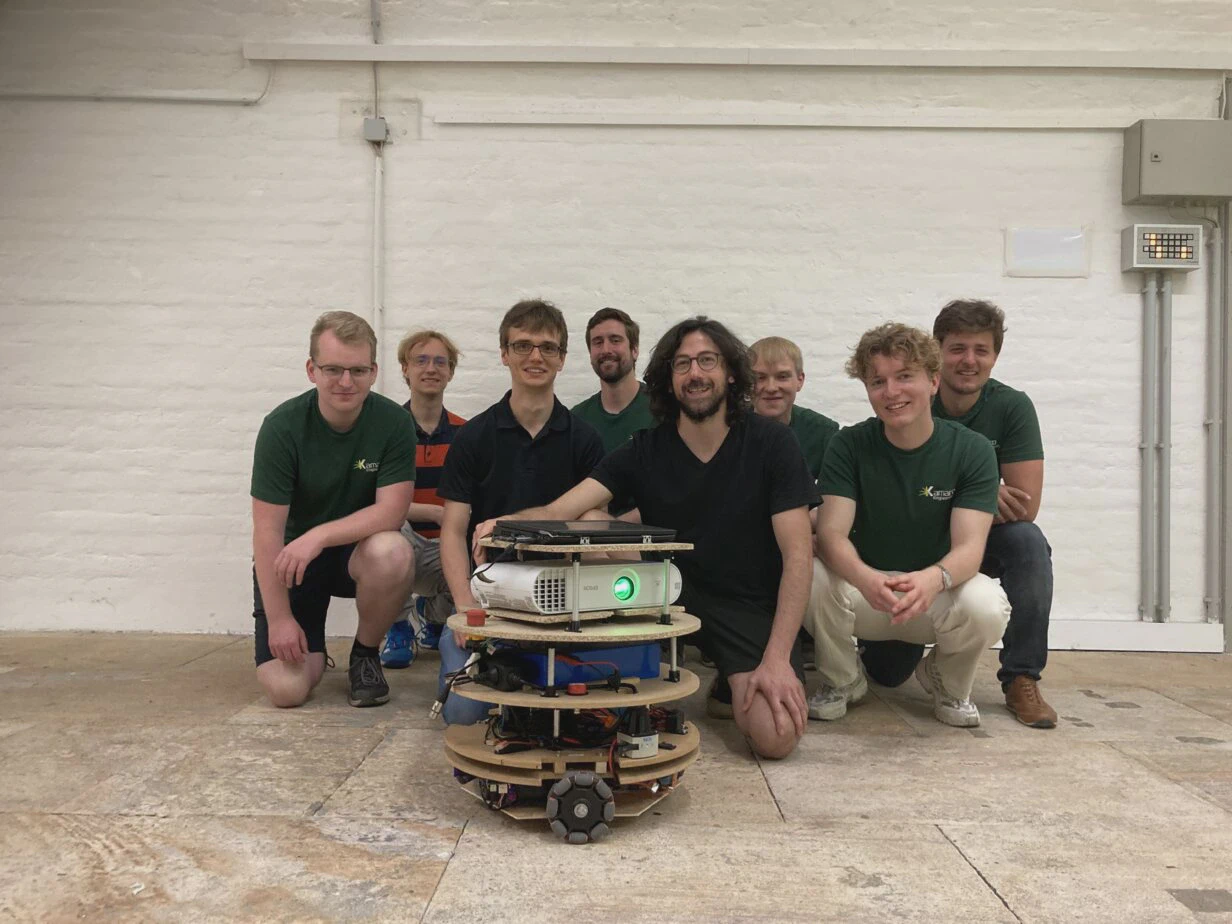
After an eventful week at the international FRE in Slovenia, we got to attend another award ceremony with artist Anas Kahal. A the first Kunstpreis TechnologieRegion Karlsruhe, the jury awarded first place to his ingenious exhibit which features one of our self-built autonomous robots. With Cassiopeia, Kahal creates a dynamic environment in which viewers are guided through found footage of the Syrian civil war by the movements of an autonomous robot.
Kamaro wins sensing Task at FRE 2023
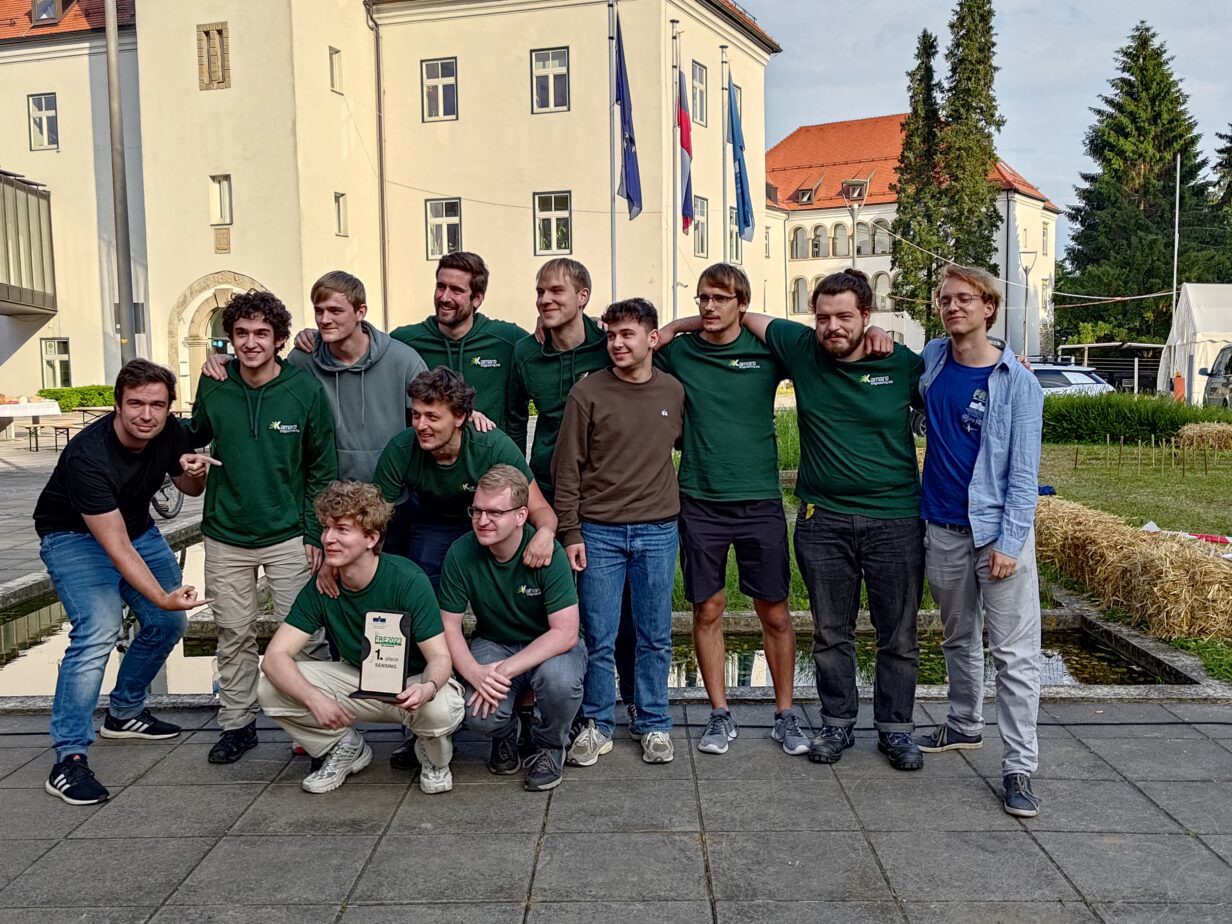
At this year’s Field Robot Event at the University of Maribor in Slovenia, our robot impressively outperformed 14 other competitors in the computer vision-focused Task 3. The task determined the accuracy of the competing robots‘ recognition systems on a series of images of people, deer, and other objects. We also took 2nd place in the Freestyle category and 4th place in the Smart Irrigation task.
We would like to thank our sponsors who supported our participation in the competition with financial resources and hardware. For a deep dive into our methodology, we will soon publish our FRE 2023 proceedings on this blog.
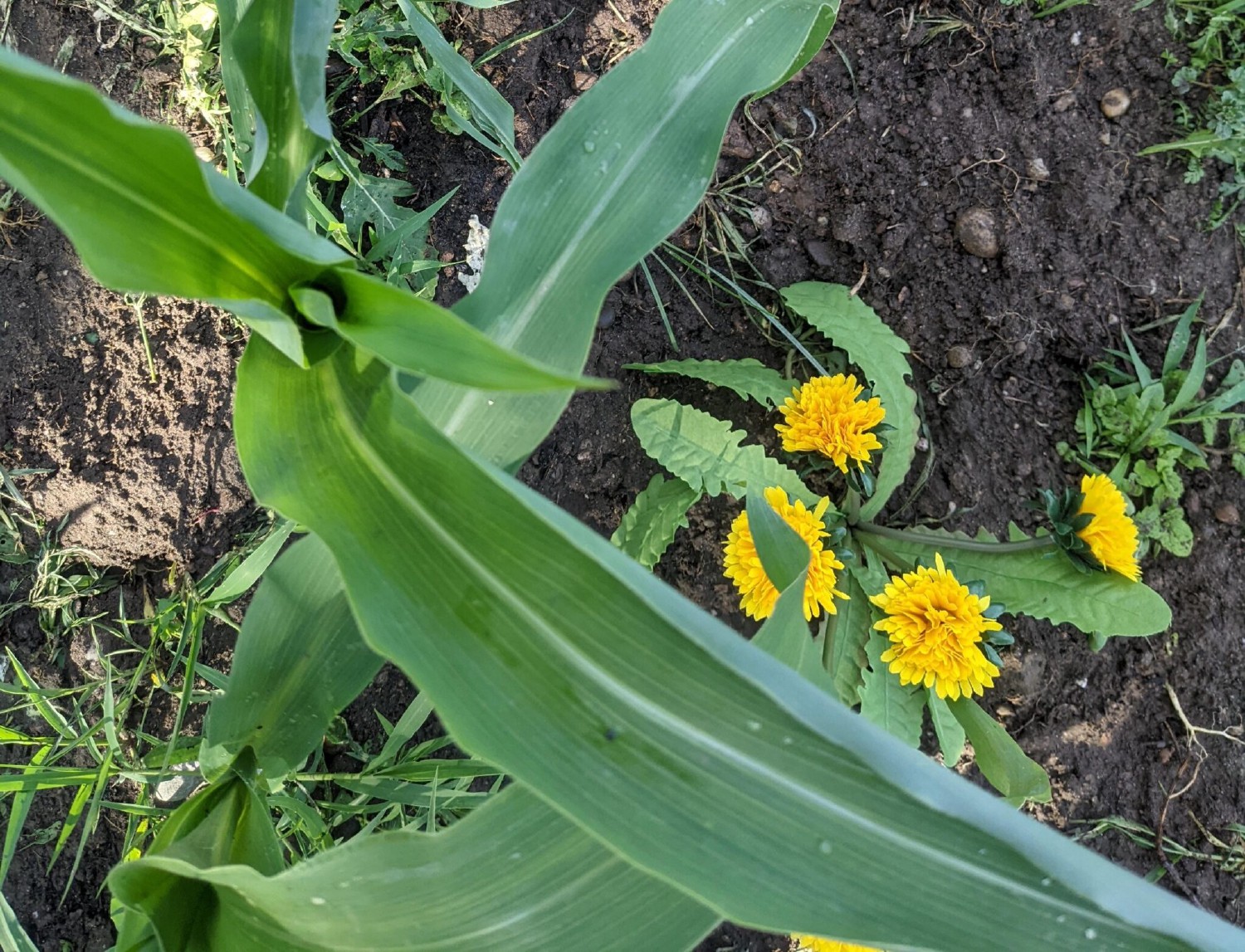
Publishing the "Carbonaro" dataset from FRE 2022
Last year, we published our dataset and models for image recognition during the online Field Robot Event 2021. Our blog post ended with a call for cooperation in creating a dataset and AI models for this year’s event, which has since taken place at DLG Feldtage in June. Team Carbonite from the Überlingen Students’ Research Center (SFZ Überlingen) approached and we subsequently worked together on building a realistic image dataset. As a nod to the two teamnames, this dataset shall henceforth be known by the name “Carbonaro”.
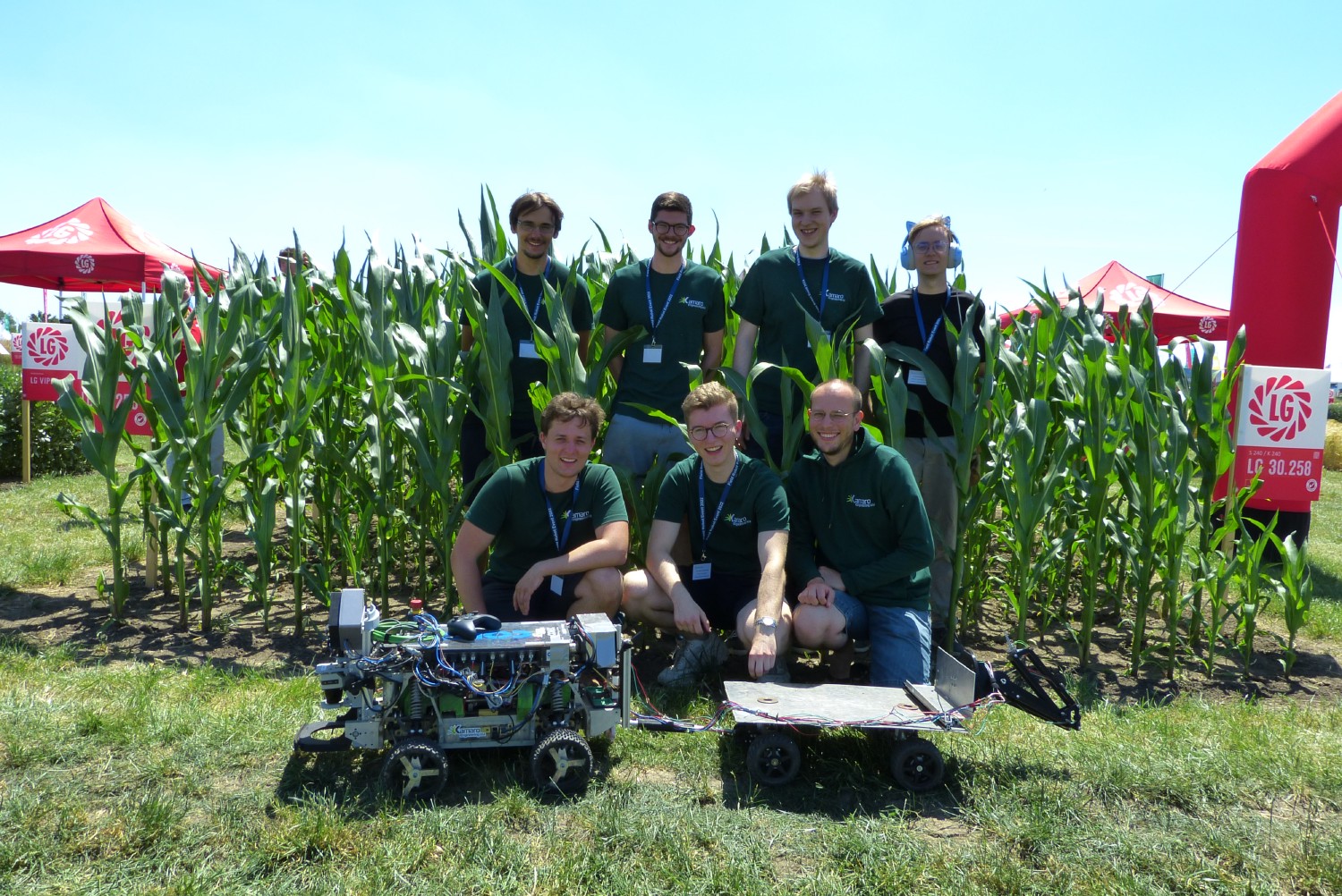
Field Robot Event 2022 Proceedings
From June 13th to 16th we partook in the annual Field Robot Event, the international field robotics showdown. This year the contest was split in a real world field contest and a virtual field contest which again took place in our virtual maize field simulation environment.
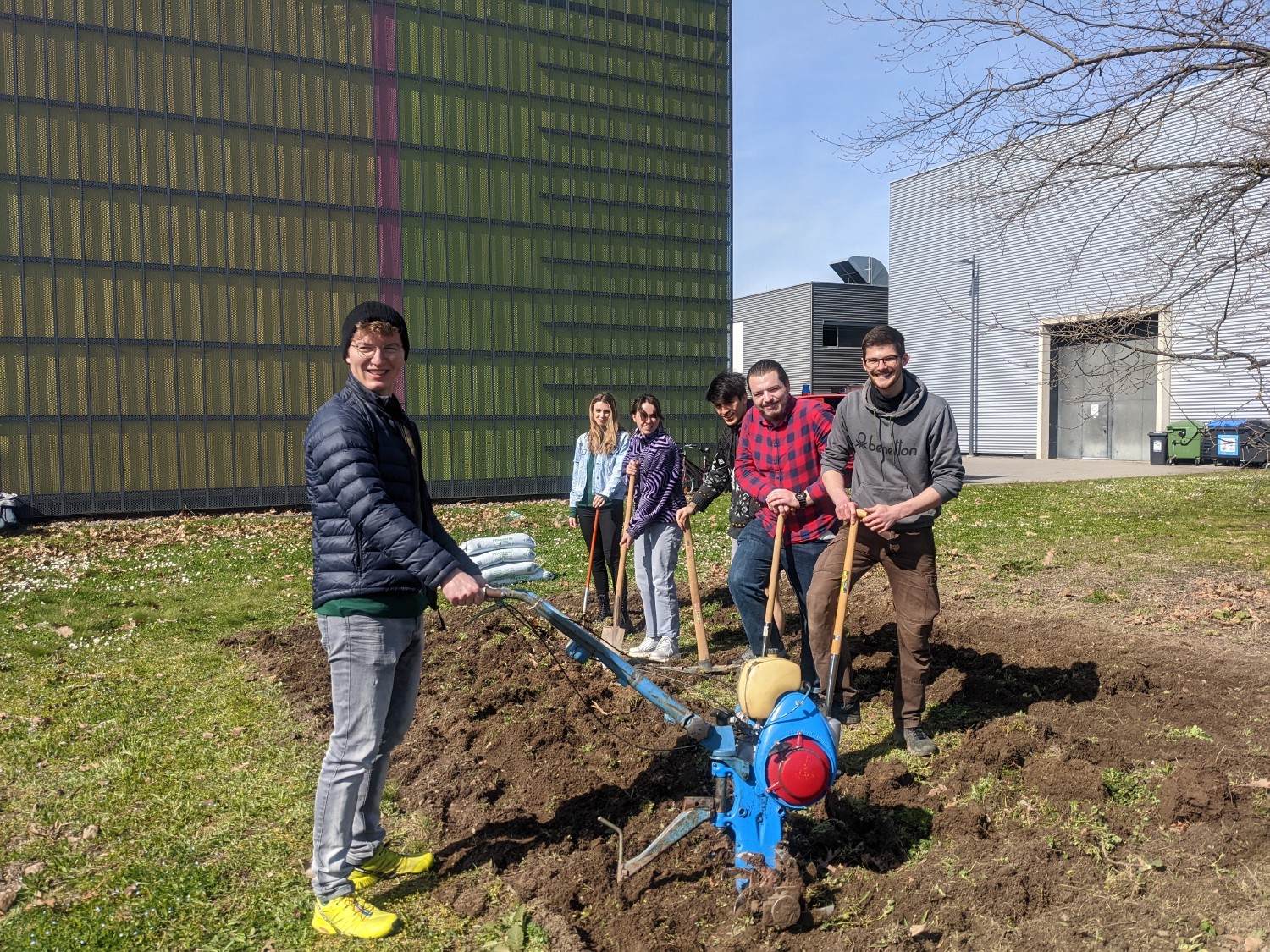
Getting ready for FRE2022: (non-virtual) testing maize field
As our name Kamaro (Karlsruhe maize robots) suggests we make maize and robots. While we have been obsessing about the robot part, we have been lacking maize as of late. Also, we were excited about testing our brand-new driving algorithm! So, we set about growing our very own maize field behind building 70.21.
The most important part of planting a healthy maize field was preparing our soil to be fluffy and receptive for our maize seeds. We more or less succesfully employed a marsh rotary tiller.
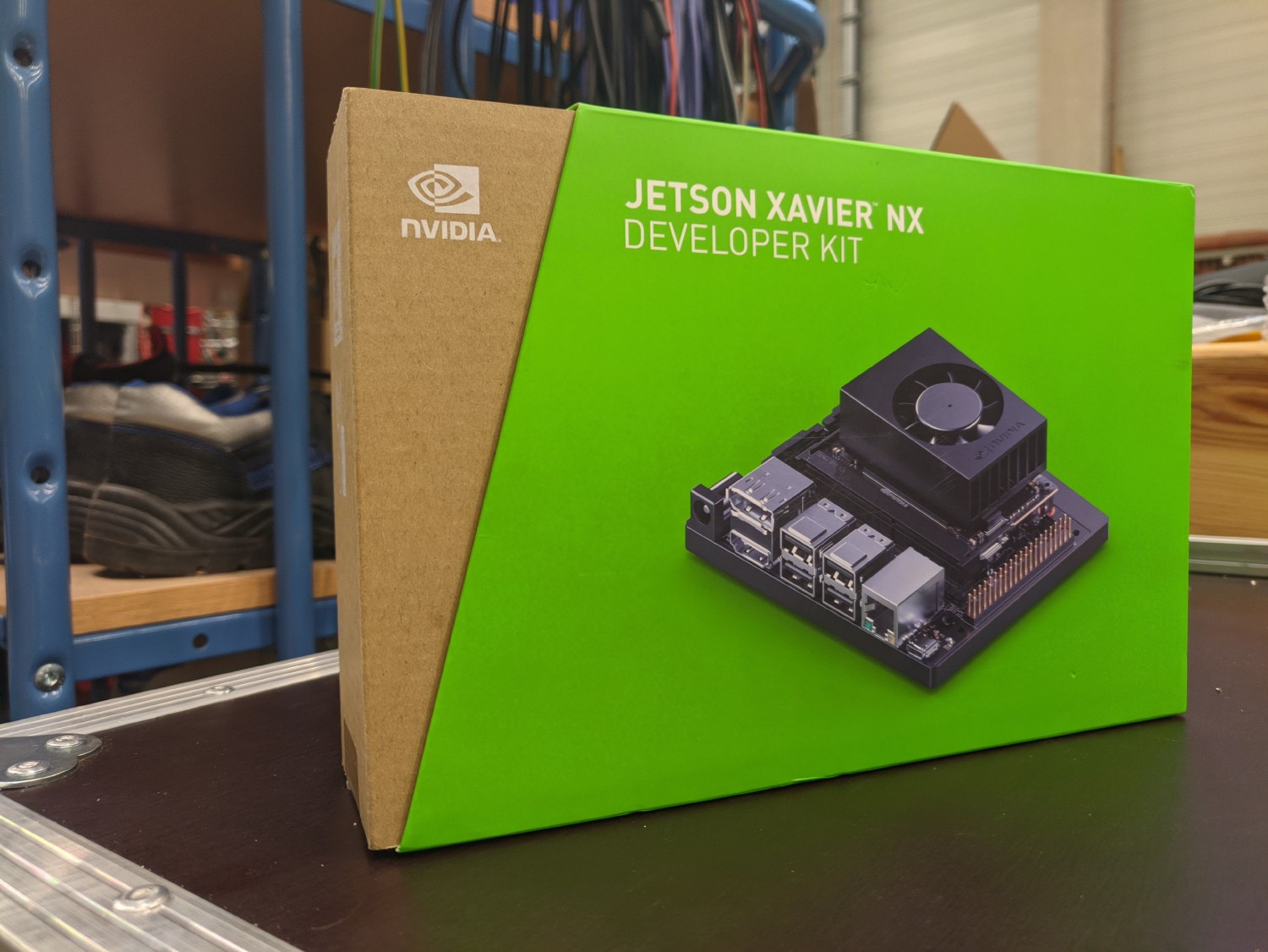
Nvidia Jetson Xavier NX integration on Beteigeuze
Up until now we used the Nvidia Jetson Nano for machine learning acceleration purposes. Sadly, running our object detection models wasn’t viable on the Jetson Nano despite using its CUDA-capable GPU. Our Jetson Nano only managed a poor 5 spf (seconds per frame) and had both its RAM and VRAM running out of space constantly. In order to remedy this, we looked for stronger hardware.
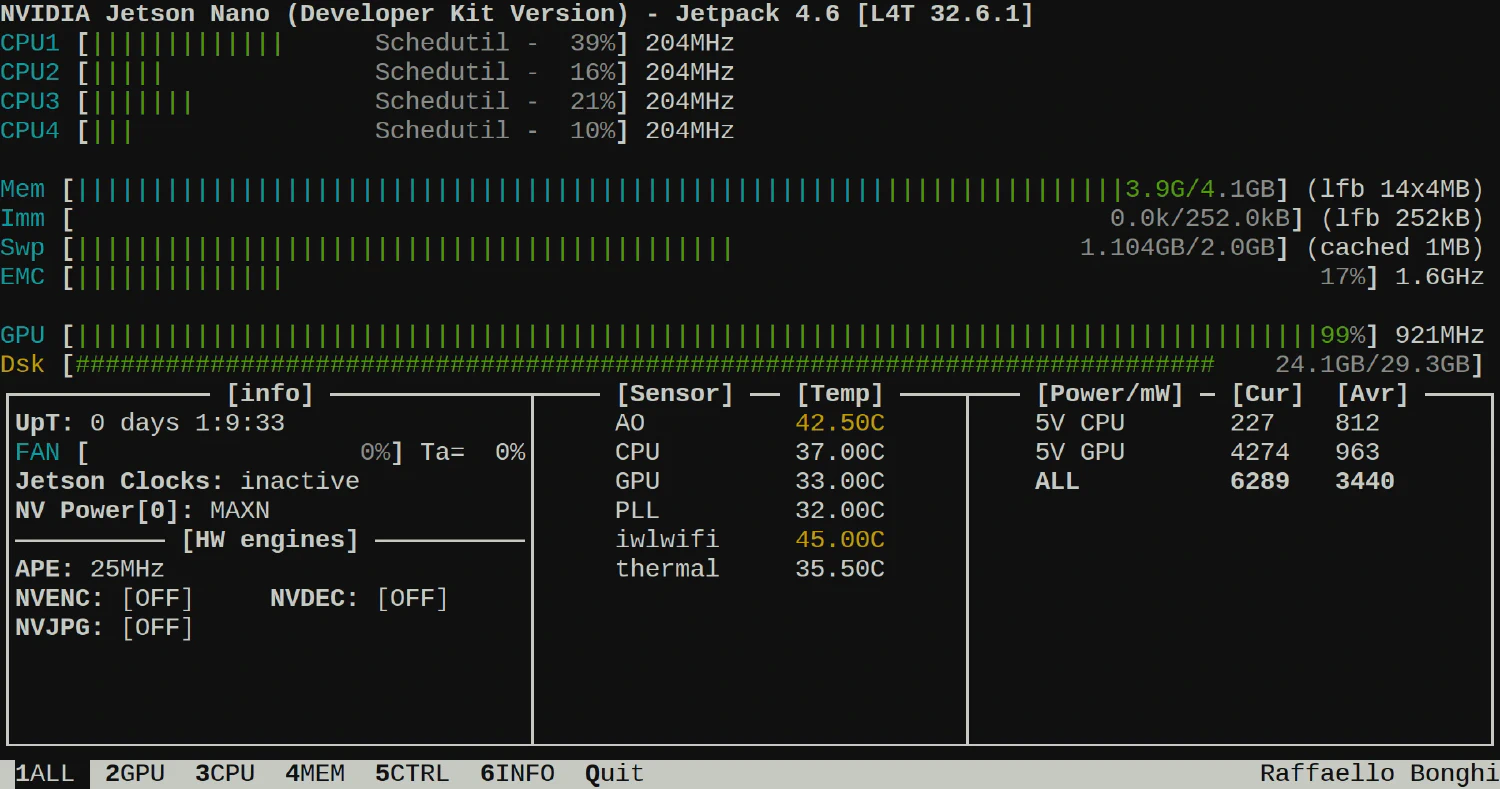
Deploying ResNet50 semantic segmentation model on the nVidia Jetson Nano using onnxruntime
When we upgraded our robot Beteigeuze with entirely new electronic components, we decided on nVidia’s Jetson Nano platform as the robot’s primary computer. The Jetson Nano is an ARM based quad-core System-on-a-Chip (SOC) that features CUDA acceleration for Deep Learning models.
As a test, we tried deploying the model that we used during last year’s Virtual Field Robot Event on the new hardware platform. Even though that model was trained for simulation, we hope that models of the same or similar architecture will be of value for us in this year’s event. The model is a ResNet50 from PyTorch’s torchvision.

Publishing our Maize Row Navigation Algorithm
Following the release of our object detection deep learning code, model and dataset, we are now publishing the code we used for navigating within a crop row at the Field Robot Event. This code has now been in use at Kamaro for several years, and most recently won Task 1 at the competition in 2021. A detailed description of the algorithm is available in the Readme file on Github and in the Proceedings of FRE 2021.